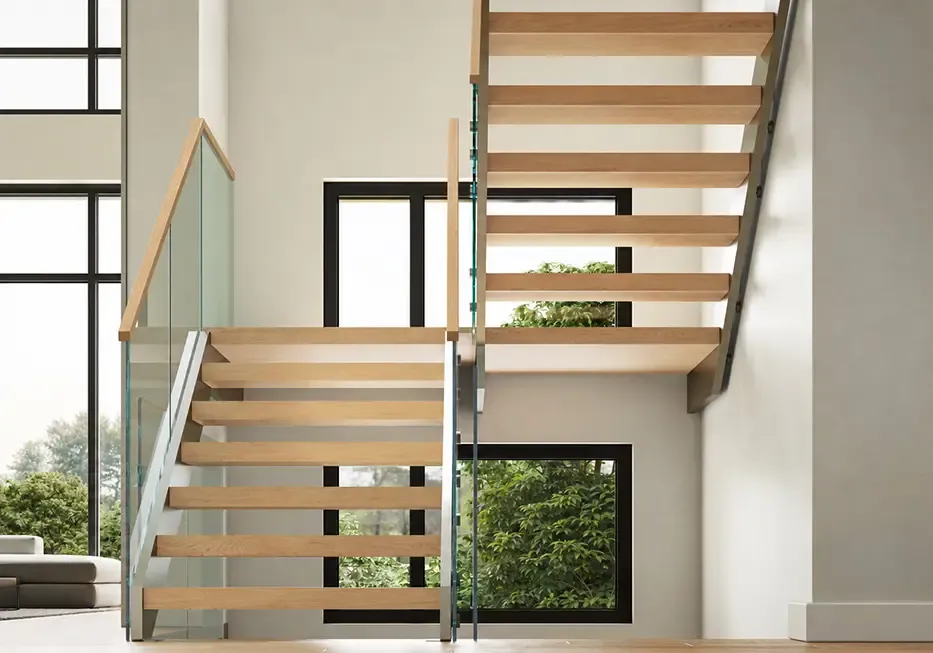
Custom Stair Treads
The tread is the most touched surface in your home. Every time you use your staircase, your foot lands on it, and over years of use, the quality of that surface tells the story of how well the staircase was built. In a floating stair design, where the tread is fully exposed and carries load without a closed riser or stringer to stiffen it, material selection and fabrication precision are not optional considerations. They are structural requirements.
At Floating Stairs Virginia, we supply and install custom stair treads engineered for the specific conditions of Northern Virginia homes. That means materials selected for dimensional stability in Virginia's climate, thicknesses sized to the structural demands of each stair system, and finishes specified to perform for decades in a high-traffic residential setting.
Seasonal Humidity and Temperature Stress
Virginia occupies a climate zone that creates real challenges for natural wood and glass components in a floating stair design. The Piedmont region east of the Blue Ridge experiences cold, dry winters and hot, humid summers, with indoor relative humidity swings that can move significantly between seasons depending on the home's HVAC system and insulation performance. In the coastal plain east of Richmond, the humidity baseline is higher year-round, which affects how wood behaves after installation.
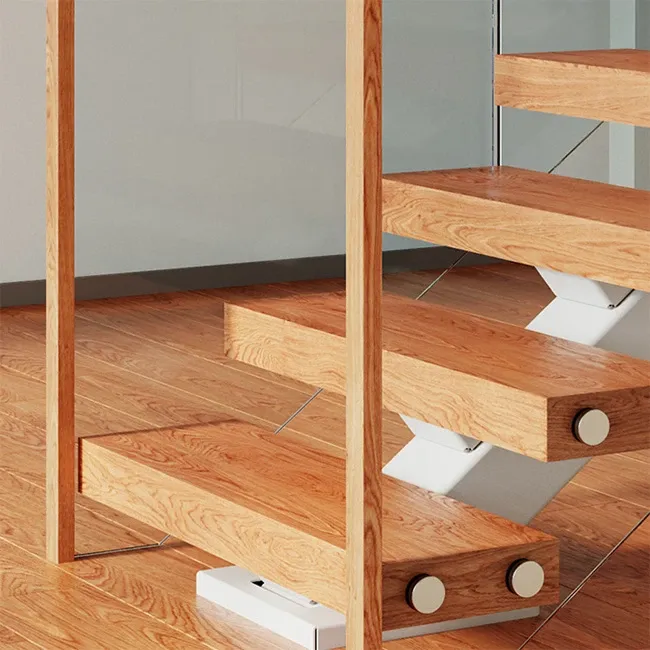
These seasonal shifts place continuous stress on any natural material that is fixed in place. Wood that is not properly dried and acclimated before installation will expand and contract with the seasons, stressing the connections at each tread bracket and eventually developing visible gaps, squeaks, or surface movement. In a cantilevered or monostringer stair system, where the tread is anchored at only one or two points, this movement is magnified compared to a traditional staircase with full bearing support beneath each step.
Glass treads in homes with large south or west-facing glazing face a different challenge. Direct solar exposure causes heat gain at the glass surface, and ultraviolet radiation degrades unprotected interlayer materials over time, causing yellowing and a loss of optical clarity.
Our tread specifications are built around these specific Virginia conditions, not around a generic national standard.
Hardwood Tread Options for Virginia Homes
We work with three primary hardwood species for floating stair treads in Virginia, each selected for a combination of structural performance, aesthetic quality, and climate compatibility.
White Oak is the most widely specified tread material in Northern Virginia's luxury market. It is a ring-porous species with a tight grain structure that resists moisture movement better than many other domestic hardwoods. It also takes both natural oil finishes and pigmented stains well, which gives designers flexibility to match it to a wide range of interior palettes. White Oak is particularly well suited to the contemporary and transitional interiors common in Reston, Herndon, and Fairfax.
American Black Walnut is the premium specification for estate-level projects in Great Falls and McLean. Its naturally dark, rich grain requires no staining to achieve a high-end appearance, and its density provides excellent underfoot mass, which contributes to the solid, quiet feel of the staircase. Walnut is kiln-dried to a lower moisture content than Oak before shipping, which makes it particularly stable in the drier winter conditions of Virginia's Piedmont zone.
Hickory is the hardest of the three species and is specified for projects where the home's mechanical systems produce a wider than normal seasonal humidity swing. Its distinctive grain pattern also suits the transitional and modern farmhouse aesthetics popular in Loudoun County and the western Fairfax communities.
All three species are supplied at a minimum thickness of 3.5 inches, cut from select-grade stock with consistent grain orientation and no visible defects. Each tread is profiled to the specified nosing detail, sanded to 180 grit, and finished to the project specification before delivery.
Every hardwood tread we supply goes through a two-stage moisture management process before installation. The first stage is kiln-drying at the mill, which reduces the wood's moisture content to a stable level appropriate for interior use. The second stage is on-site acclimation, where the treads are stored inside the home for a period of time sufficient for the wood to reach equilibrium with the building's specific temperature and humidity conditions.
This second stage is the one most commonly skipped by contractors who are working quickly or who do not understand its importance. Skipping it means installing treads that are still adjusting to their environment, and the movement that follows installation is inevitable. By completing both stages before any tread is fastened in place, we eliminate the primary cause of post-installation movement in hardwood floating stair systems.
Glass Tread Options for Light-Filled Virginia Interiors
For homes with large glazed facades, open-plan volumes, or interior spaces designed to maximize natural light, laminated glass treads are an alternative to hardwood that produces a dramatically different visual effect. A glass tread allows light to pass through the stair plane entirely, which creates a sense of weightlessness in the staircase and allows daylight to penetrate to lower floors that would otherwise be shaded by solid treads.
We supply tempered laminated glass treads with UV-stable interlayers. The lamination process bonds multiple layers of tempered glass with an interlayer film that holds the panel together in the event of breakage, which is the critical safety feature that makes glass treads viable in a residential setting. The UV-stable interlayer prevents yellowing and maintains optical clarity over time, even in treads that receive direct solar exposure through south or west-facing windows common in Reston and Tysons-area modern homes.
Tread Finish and Profile Options
The nosing profile and surface finish of a stair tread define both its visual character and its functional performance. A square-edge profile reads as clean and modern and is the standard specification for contemporary floating stair designs. A slightly eased or bullnose edge softens the look and is more common in transitional or traditional-leaning interiors.
Surface finishes range from penetrating oil, which enhances the natural grain and produces a matte appearance, to hardwax oil, which provides more surface protection while remaining relatively low-sheen. Polyurethane finishes are also available for applications requiring maximum abrasion resistance in high-traffic family homes. Every finish we apply is specified to the project environment and the homeowner's maintenance preference.
Contact Us
Whether you are replacing worn or damaged treads on an existing staircase or specifying materials for a new floating stair installation, the quality of the tread material and the care taken in its installation will determine how the staircase performs and looks for decades. Contact Floating Stairs Virginia to discuss tread options for your specific project, including species selection, thickness, profile, and finish. Our team will help you make choices that suit your home's climate conditions, design intent, and long-term performance expectations.