
Modern Railing Systems for Virginia Floating Staircases
A railing system is not just a safety requirement. It is one of the most visible design decisions on your entire staircase. The material, profile, and spacing of your railing define the visual weight of the staircase and determine how open or enclosed the surrounding space feels.
Railing Systems Engineered as Part of the Staircase
At Floating Stairs Virginia, we design and fabricate railing systems as a core part of the staircase entity, not a separate trade bolted on at the end. Every railing detail is engineered to work with the stringer, the tread material, and the broader interior architecture of your home.
Our railing systems are fabricated by the team at Capitol Iron Works, which means they meet the same structural and finish standards as the staircase itself. There is no gap in quality between the stair structure and the rail system sitting on top of it.
Frameless Glass Panels
Frameless glass is the most requested railing system for contemporary floating stair designs across Virginia. It preserves sight lines, allows natural light to pass through the staircase volume, and disappears visually so the staircase structure remains the focal point.
We use 12mm or 15mm tempered and laminated glass panels, fixed with low-profile stainless point fixings or fully recessed base channel systems. The result is a railing that appears to float alongside the staircase steps with no visible frame interrupting the glass surface. All glass panels are specified to meet IBC load requirements for residential guard rails, including the 200-pound concentrated load test at the top rail.
Horizontal Cable Rail
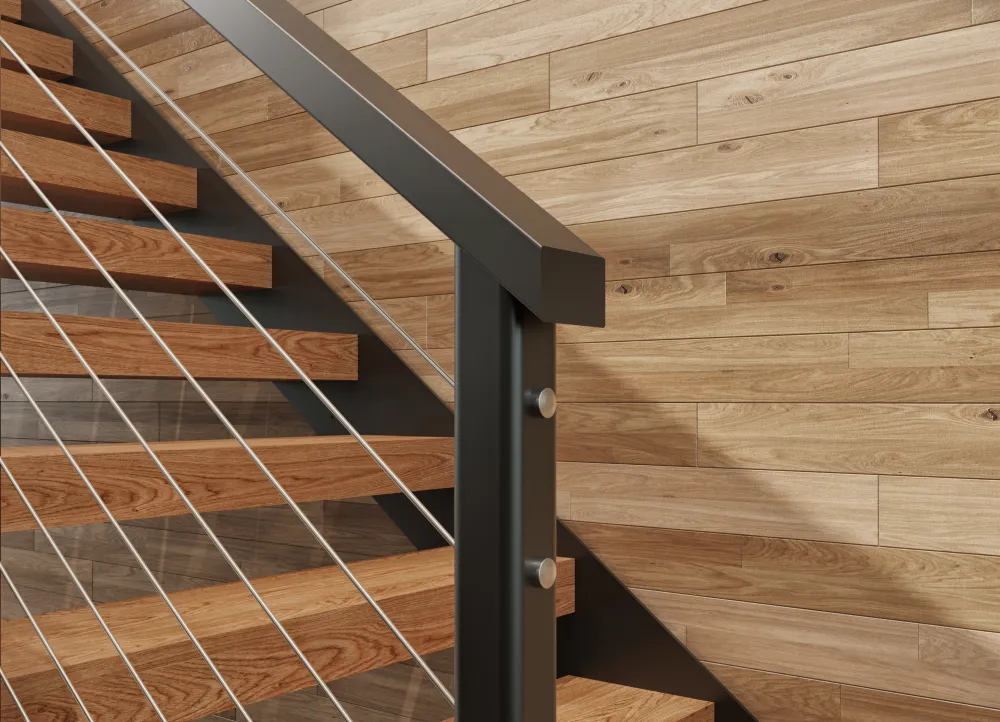
Cable rail systems bring a clean, industrial-modern aesthetic to a staircase without fully closing off the visual plane the way a solid panel would. Individual stainless cables run horizontally between posts, creating a layered effect that reads differently depending on your viewing angle.
We use 1x19 strand 316-grade stainless cable, tensioned to manufacturer specification and checked for deflection compliance under lateral load. Post spacing and cable tension are both calculated to meet current International Building Code (IBC) infill requirements, which limit cable deflection to prevent the rail from functioning as a climbing structure.
Custom Steel and Ironwork
For homes where the architecture calls for something more characterful, we fabricate custom steel railing panels and ironwork balustrades in-house through Capitol Iron Works. Designs range from simple flat-bar geometric patterns to complex scrollwork and historic-reference ironwork details.
This option is particularly relevant for Virginia homes with transitional or traditional architectural styles, where frameless glass would feel out of place and cable rail would feel too casual.
How We Design Around Your Architecture
The railing system we recommend always starts with the architecture of your home, not with a product catalog. Open-plan contemporary homes with double-height volumes benefit most from frameless glass or fine cable systems, because visual transparency preserves the sense of space. Homes with more enclosed floor plans and lower ceiling heights sometimes benefit from a more solid railing presence that anchors the staircase visually rather than trying to make it disappear.
Transitional homes, which blend traditional architectural bones with contemporary interior finishes, often respond best to a custom steel railing with a clean profile and a dark powder-coat finish. This approach respects the character of the architecture while still reading as modern and intentional.
The Right Railing Makes Everything Look Better
A railing system that simply passes code is a missed opportunity. One that is designed with the same intention as the staircase beneath it becomes part of something genuinely remarkable. Every railing system we install is designed to meet current IBC residential guard rail requirements, including minimum height standards of 36 inches, maximum baluster spacing of four inches, and top rail load resistance specifications.